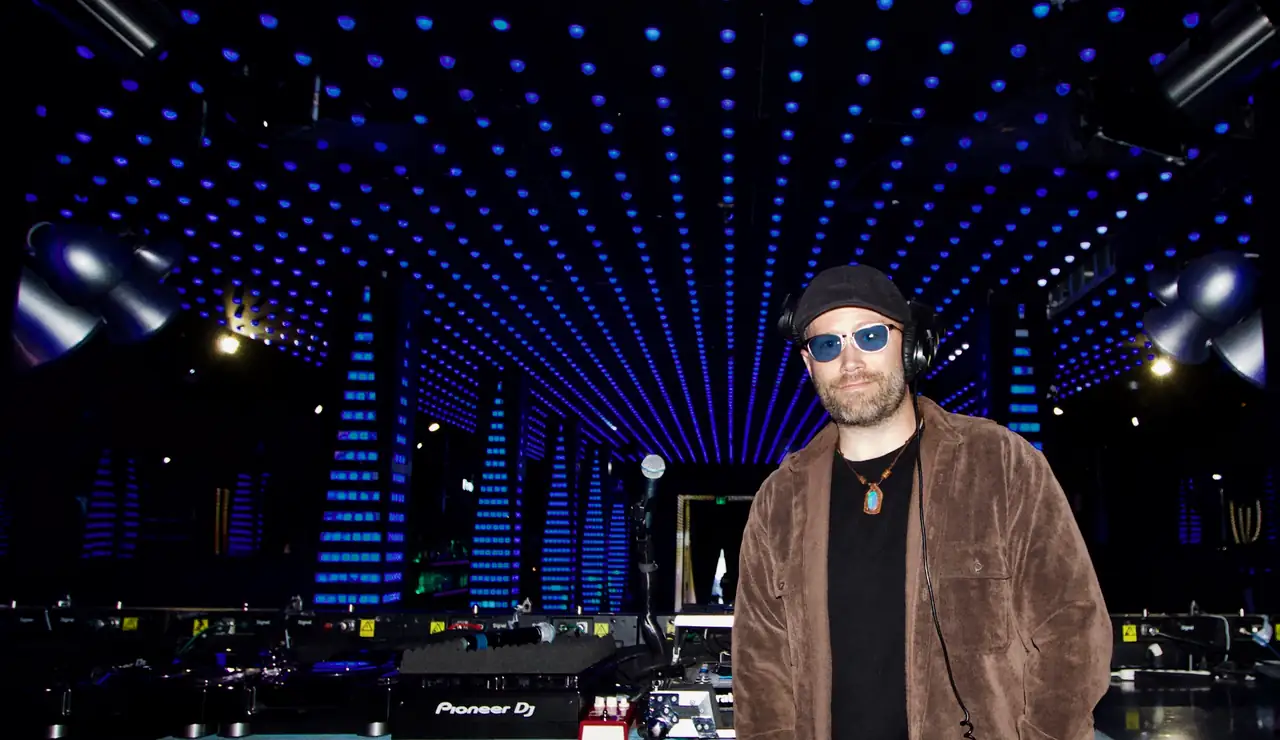
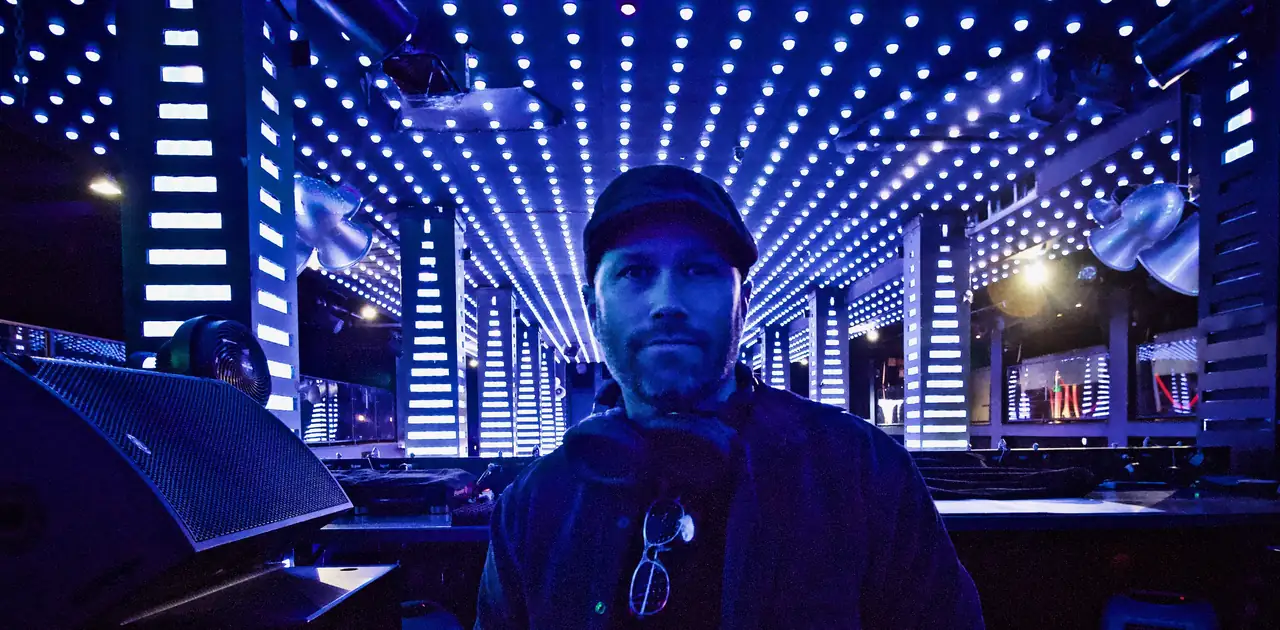
Main room
The big dance room at street level: a custom DJ booth, a main stage and a dance floor ringed by VIP booths, all inside the LED installation, on a Void sound system. My photos on this page are from this booth.

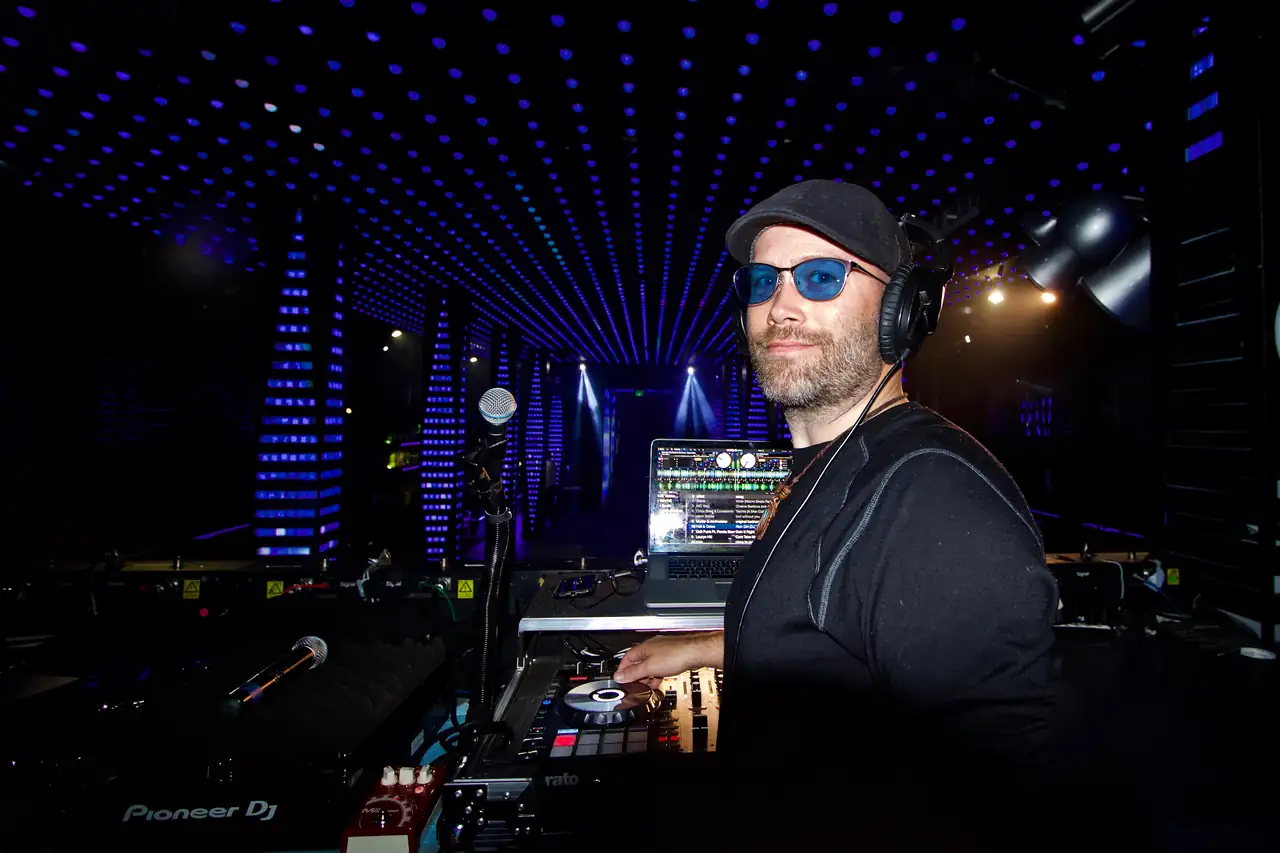
At Temple a custom LED installation wraps the whole main room, DJ booth included. I've played that booth. For a private event there I bring the music, the microphone and a timeline that turns a club into your night.
Temple sits at 540 Howard Street in San Francisco's SoMa district, a short walk from Moscone Center and the Salesforce Transit Center. It opened in 2007 in the building that used to be Club DV8, and it's officially Temple SF, or Temple Nightclub. Most people just call it Temple.
The look is the point. The room was drawn from 1980s science fiction, films like Tron and Blade Runner, and the main room's custom LED installation wraps around you, with the DJ booth as its focal point. There's a second club room below and a seasonal rooftop lounge above. For private events the venue sells the whole building as Zen Compound: the two club rooms, the rooftop, an art gallery, a cafe and bar and a coworking space, all connected, booked one at a time or together.
The room already knows how to dance. What a private night needs on top of that is the human part: a welcome, a toast people can actually hear, and a plan for when the dancing starts.
The big dance room at street level: a custom DJ booth, a main stage and a dance floor ringed by VIP booths, all inside the LED installation, on a Void sound system. My photos on this page are from this booth.
Downstairs, a smaller, tighter club room with VIP tables, its own DJ booth, LED-lit columns and its own sound system. On Temple's own nights it runs as the second room, with an open-format sound of its own. The venue books its spaces one at a time or together, so for your event it can be a second room with a different sound, or the whole night for a smaller group.
The rooftop bar and lounge, with city views, open in the summer months and used mostly by day. The venue's events page calls it Skyline Rooftop and lists a stage setup and a sound system up there. Open air changes the job: sound doesn't bounce back the way it does indoors, and wind gets at a microphone. I settle the hours and the level for music up there with the venue, and plan the set to them.
A club gives a DJ a lot to work with. A private event asks for more than a club night does, and that's the part I plan.
The main room is built around its booth, so that's where I run the night from. I've played it with my own controller set up on the booth, which is the rig in my photos. Before your event I go over the booth with the venue's team: what's in it that night, what I bring and what plugs into what.
The main room runs a Void sound system, and a club system is there for dancing, not background. A private event still has arrivals, drinks and conversation. I keep the early music at a level people can talk over, then build it as the room is ready.
A dance room is set up for music, and a toast is a different job. I bring a wireless microphone and check it before guests arrive, from the dance floor and from the VIP booths around it. Entrances, toasts, a product reveal, an award: I announce each one, so nobody has to shout over the room.
If your event uses more than one space, people need to be told when to move. I plan the order with you and make the announcements on the night. If two rooms need music at once, an additional sound zone goes in the estimate. I settle load-in with the venue ahead of time, and I arrive early. For your guests, the venue's own advice is rideshare: drop-off is right at the front door, with street parking and paid lots a walk away.
Renting a nightclub for a private event sounds simple until you're the one deciding when the speeches happen and who tells two rooms of people that it's time. That's my job. We go through a planning questionnaire and a music call, your must-plays and do-not-plays, and by the time I arrive I already know your event inside and out.
On the night I'm the MC as well as the DJ: the welcome, the toasts, and telling the room when it's time to move. I plan the timeline to the end time you choose, so the dance floor gets its full stretch and the last song is the one you picked. And I confirm Temple's rules for your night myself.
The LED ceiling and columns in my photos are Temple's own installation, not my lighting. In the main room I wouldn't add much. The better move is to ask the venue who runs the visuals and work with that person so the room changes when the music does.
My lighting belongs in a space the installation doesn't reach: uplighting or a custom monogram projection, placed where the venue and I agree. Those are add-ons you choose in the instant estimate.
Temple is a nightclub first, and it books private events across the whole building. With Moscone Center a short walk away, that makes it a natural room for a company party after a conference day, a brand or product launch, a holiday party, a fundraiser, or a milestone birthday that wants a real dance floor. By its own rule Temple is a 21 and over venue.
Temple doesn't present itself as a wedding venue. It can make a strong after-party or welcome night, though. For those, a Selector Session fits: a set of my own programming, Afro and tribal house, soulful electronic, hip-hop and the classics, reworked for the room. When your crowd calls for open format, I play that instead.
Clubs, festival stages and every venue from Napa Valley to the coast are on one page: Places I've played.
Your date, which spaces you're looking at, and the feeling you want in the room. The instant estimate takes a couple of minutes, or book a short call and we'll talk it through. I'll take it from there.